
Know exactly what AI tells buyers about you.
AI assistants describe your product thousands of times a month — to buyers who never reach your site. Clovion shows you every claim they make, quoted word for word.
- Every answerRead in full, every week
- Every claimQuoted verbatim, never clipped
- One sourceTraced for every negative claim
Why this isn’t a sentiment score
Sentiment tells you the mood. Perception tells you the claim.
Most AI-visibility tools stop at a score. Here’s what that actually means next to what Clovion gives you instead.

Sentiment tools
What every other AI-visibility tracker shows you.
- A mood score — “93% positive”
- No source, just a number
- One blended score across all engines
- Nothing to act on
- Unsure before committing
Clovion Perception
What Clovion shows you instead.
- The exact claim, quoted word for word
- Traced to the exact page it came from
- Broken down per AI engine
- A ranked fix, ready to ship
- Preview your app instantly with your URL
The problem
AI describes your product all day, unsupervised.
Those descriptions decide shortlists before you know the buyer exists. Most brands have never read a single one.
What a buyer saw yesterday
AI Answer“…a good fit for startups, though it lacks the advanced reporting and permission controls larger sales teams need.”
- Startup fit
- Weak enterprise reporting
- Weak enterprise reporting
What you get
The full picture of how AI sees you - with a receipt under every number.
Those descriptions decide shortlists before you know the buyer exists. Most brands have never read a single one.

Every claim AI makes about you - counted, ranked, quoted
Your strengths ranked by how often engines repeat them. Your issues stated in plain language, with the exact quotes one click away.

Perception confidence
High — reinforced across 4 engines
not a one-off answer, a consistent pattern
Reinforced Across




Company size fit (As AI Describes It)
Industry AI File You Under
Trace every negative claim to the page that taught it
Engines learn claims from pages they cite. Perception finds that page and verifies the claim is on it. In one pilot: one listicle, one correction request, eight answers changed.

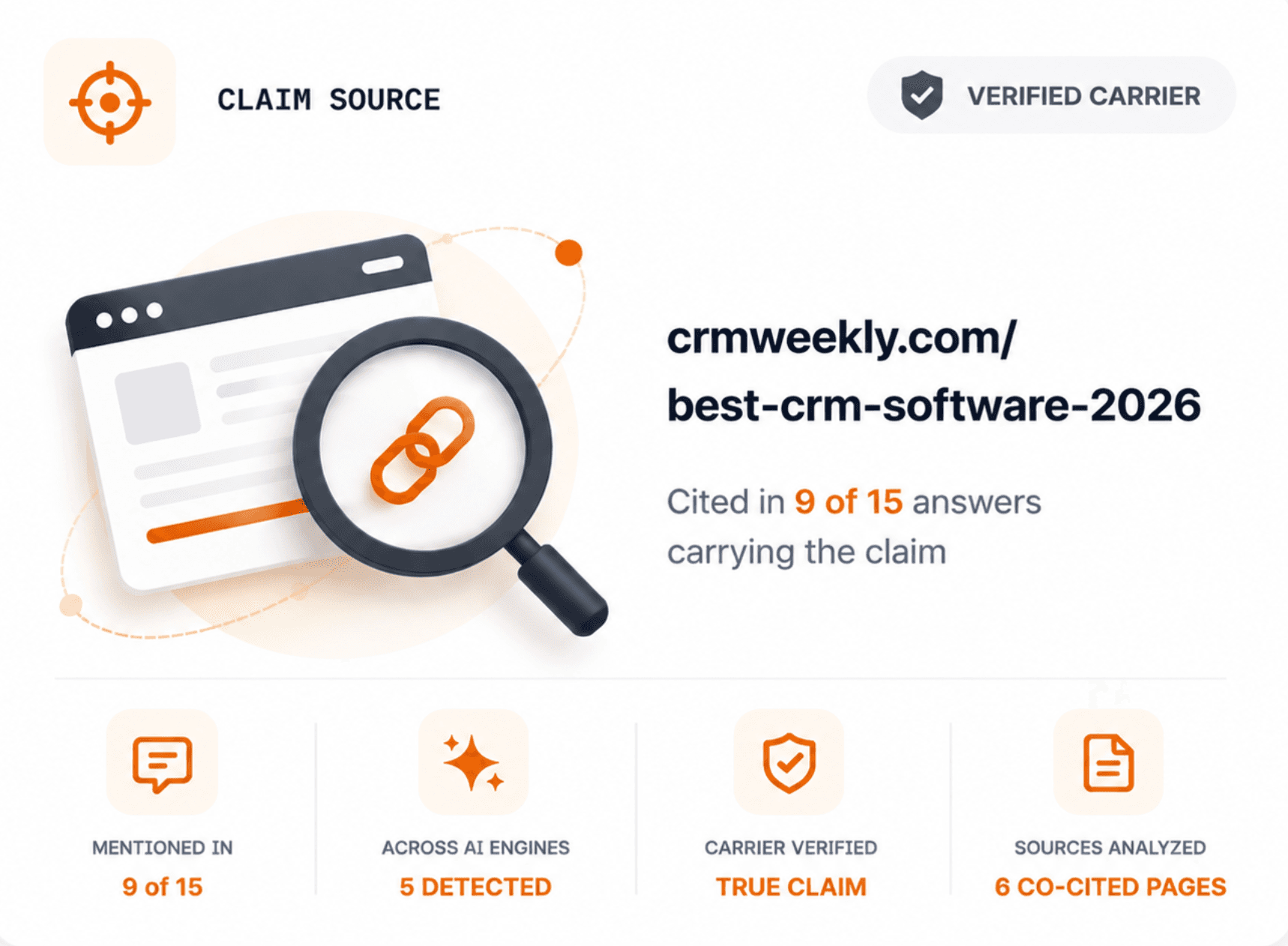
Compare how each engine describes you, side by side
Each engine reads different sources and files you differently. The portrait grid shows every attribute per engine and flags the splits — so you know which engine needs which fix.

Small Team
Claude
29 Mentions
ChatGPT
38 Mentions
Gemini
22 Mentions
Enterprise
Claude
1 Mentions
ChatGPT
0 Mentions
Gemini
2 Mentions
AI ENGINES


60
Prompts analyzed
3
AI engines compared
2
Audience types
Catch wrong facts about you - pricing, plans, features - before they spread
Engines quote concrete values, and values go stale. Perception spots when engines disagree about a fact and queues the fix.

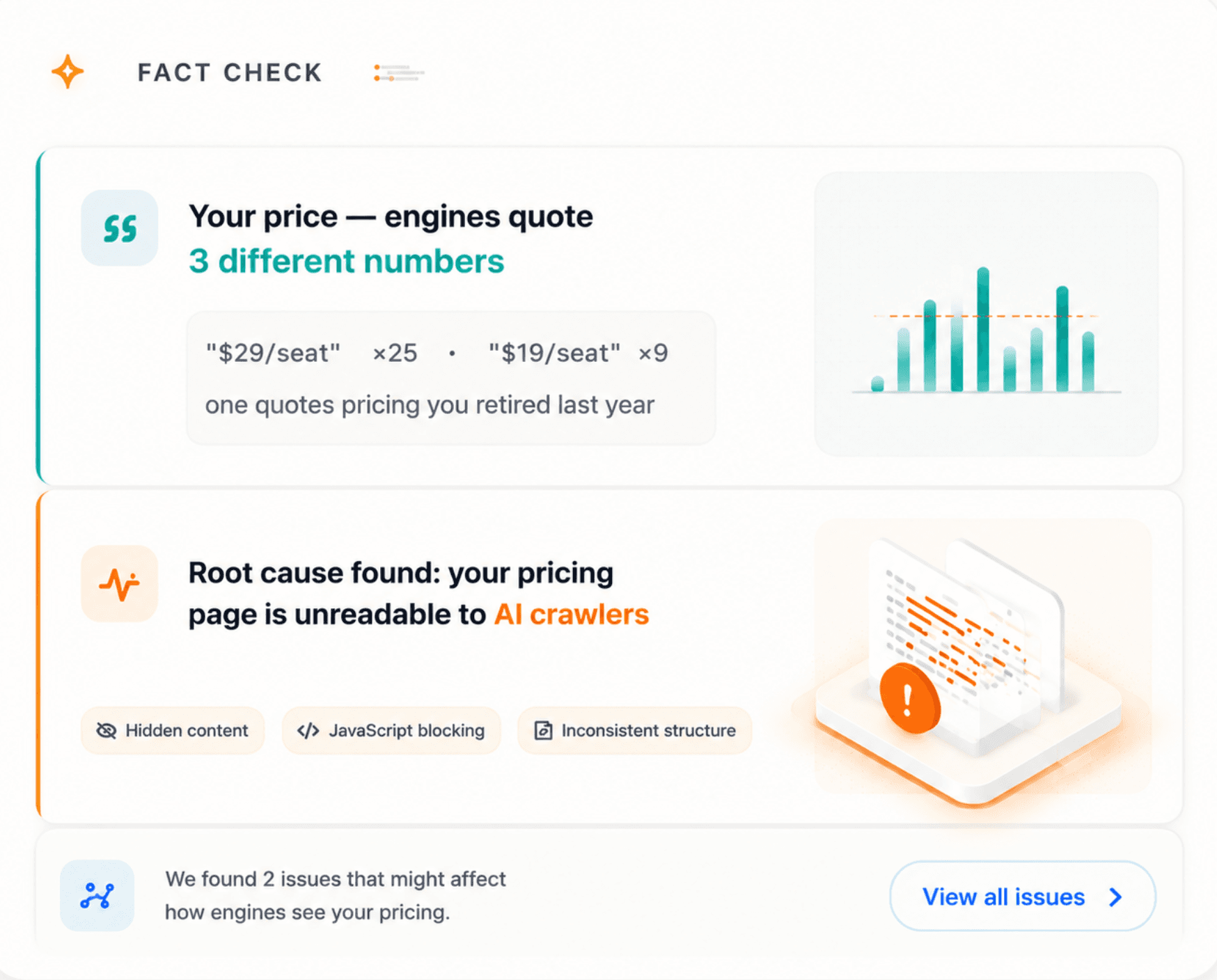
No false alarms — every flag is a claim actually made, read in context
Keyword tools cry wolf. Perception reads every sentence the way a person would. And when a negative claim is simply true, we mark it "accurate - your call" instead of sending you to fight a fact.


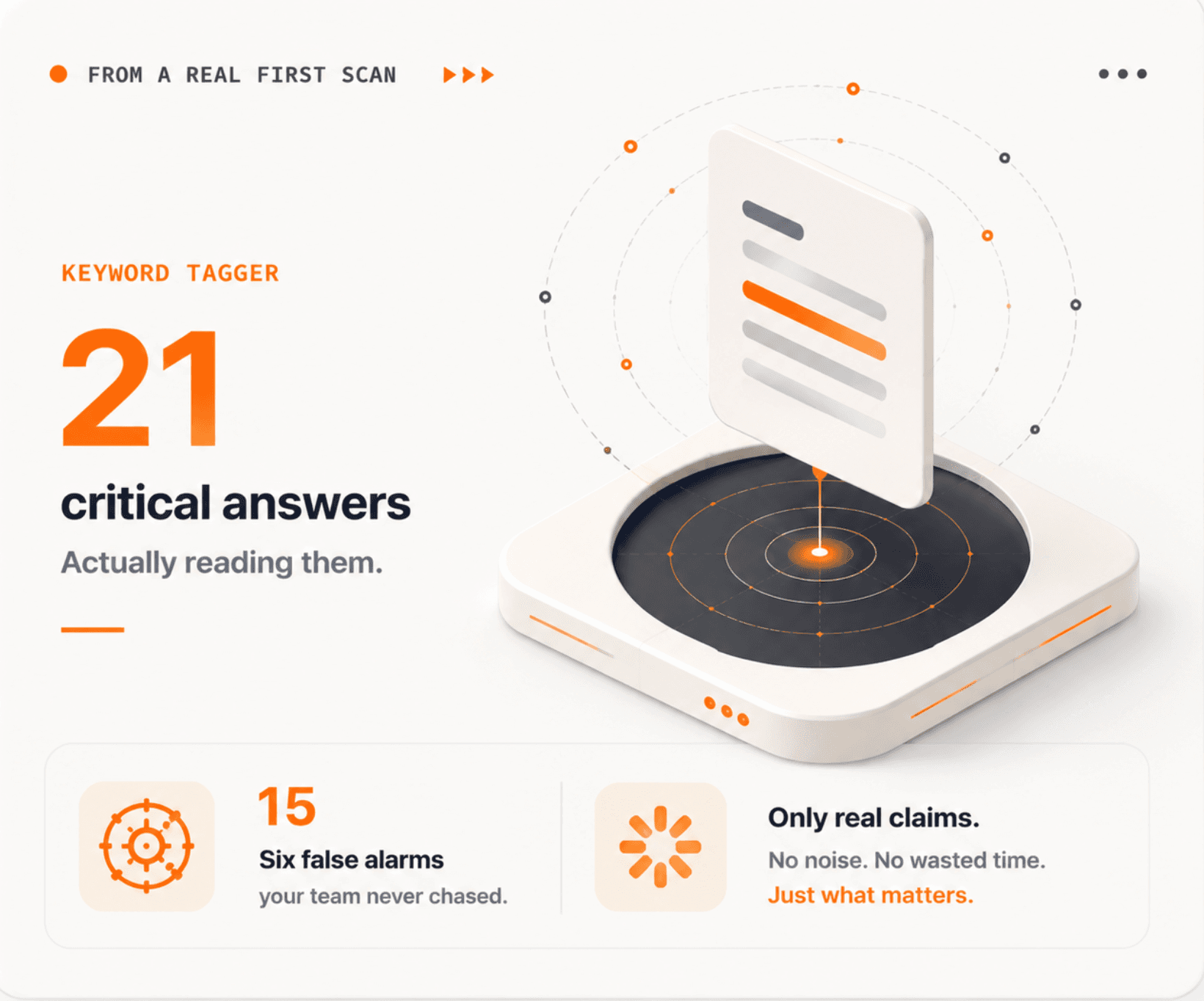
Every issue on this page becomes a fix on the next one.
Questions
Frequently Asked Questions
What is Clovion AI?
Clovion tracks how AI engines like ChatGPT, Claude, Gemini, and Perplexity describe and recommend your brand. Its agents find why you're missing from answers, write the content that fixes it, and measure whether each fix worked.
What does the content agent do?
It picks up each ranked recommendation and writes the content that resolves it — the missing page, the weak section, the wrong description. Every draft lands in a review queue rather than on your site.
How is this different from other AI visibility tools?
Most tools stop at a score. Clovion traces every issue to its cause, ranks it by how much it should move your visibility, writes the fix, and then measures whether your citation share actually improved.
Which AI engines does Clovion cover?
Six engines, each tracked on its own and never blended into one score — ChatGPT, Claude, Gemini, and Perplexity among them. Every prompt runs repeatedly, so you're reading a real trend instead of one lucky answer.
How do you know a fix worked?
We baseline your citation share before anything changes, then measure the prompts you touched against untouched prompts and your competitors once the fix is live. You get honest outcomes, nulls included.
Does the content agent publish without me?
No. Nothing ships without you — every draft goes to a review queue where you approve, edit, or reject it. Final control stays with you.